

Every voyage begins with a simple yet defining question: Where are we headed?
It may sound trivial, but clarity of direction is what separates purpose from drift.
At Acculligence, our compass has always pointed toward clarity, accuracy, and insight. Yet we also know that no amount of data, technology, or automation can steer a ship without a guiding hand.
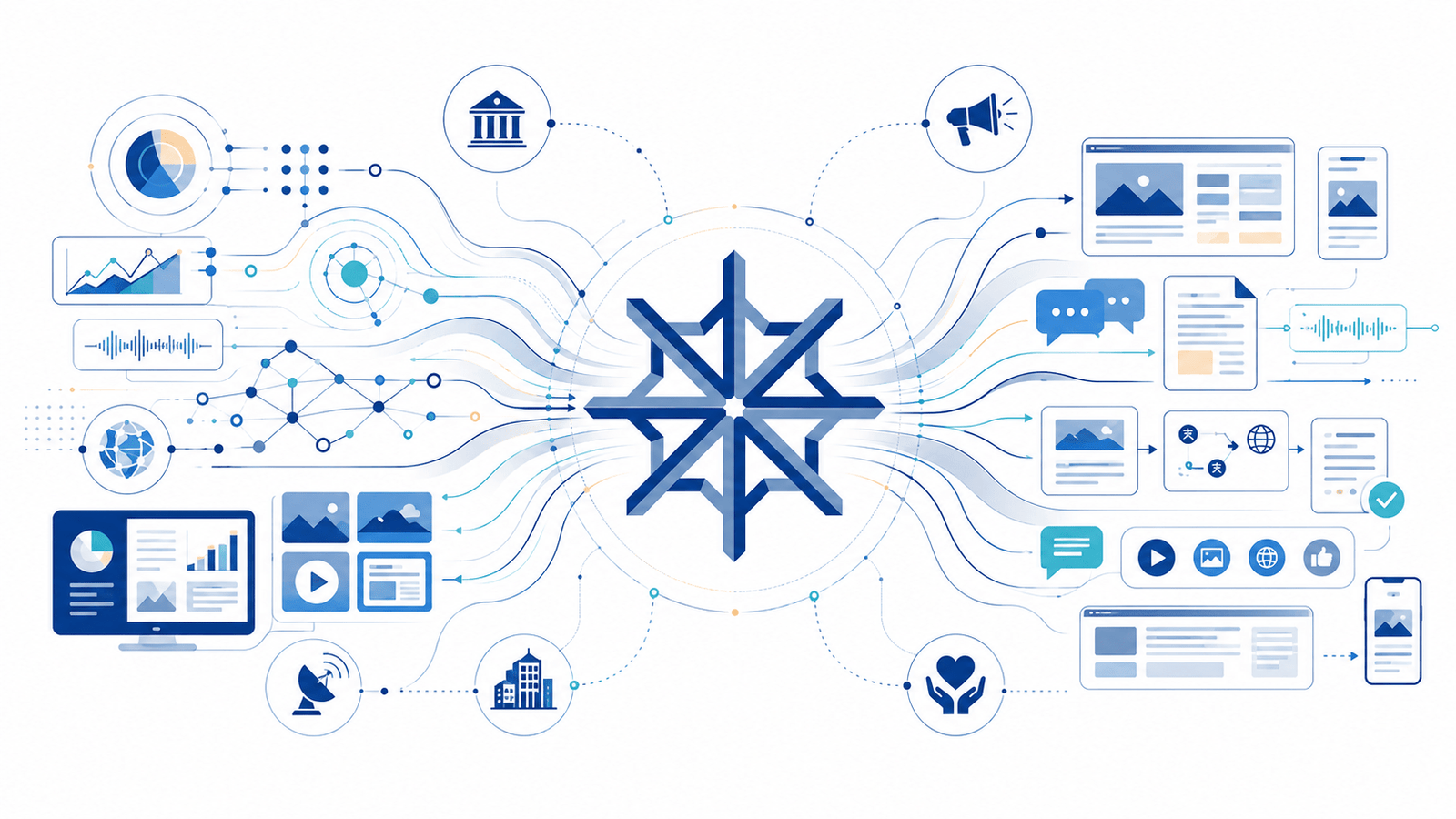
That’s why our new visual identity revolves around the helm, a symbol of guidance that turns movement into purpose.
Why the Helm?
Since humankind first ventured into the sea, the helm has guided countless journeys.
Over centuries, sails have given way to engines, and celestial navigation has evolved into GPS precision. Yet one thing has never changed — someone must remain at the helm.
It reminds us that, at the heart of every advancement, human judgment remains in command.
However advanced our tools become, it is the human mind — the thinker, the analyst, the strategist — that gives meaning to movement and turns information into intelligence.
This belief lies at the heart of the Acculligence philosophy.
In a world awash with data and increasingly shaped by algorithms and artificial intelligence, wisdom lies not in surrendering to machines but in guiding them — interpreting, analyzing, and transforming data into actionable insight.
The helm symbolizes the balance between human insight and machine intelligence.
Purpose Before Motion
A ship can sail vast oceans, but without a clear direction, it merely drifts faster toward nowhere.
Direction must precede acceleration.
Whether we are monitoring media trends, analyzing narratives, translating ideas, or creating content, we begin with the same essential question:
What’s the goal? What’s the purpose?
Only after that do we let technology amplify our reach and efficiency.
For us, the helm serves as a constant reminder that vision — not velocity — keeps us on course, ensuring every journey ends where it’s meant to, not where the current happens to take it.
Human Intelligence at the Helm
We live in an age ruled by algorithms, where headlines are parsed, reports compiled, and summaries generated in seconds.
But even the most advanced systems can misread, distort, or generate inaccurate conclusions.
That’s why human direction has never been more essential.
We observe, analyze, interpret, localize, and refine — our eyes fixed on the goal, our footing steady on the charted course, unswayed by noise or haste.
To us, the helm is not just a tool of control — it’s a symbol of responsibility:
the duty to guide decisions with clarity, anticipate risks before they surface, and steer through complexity with confidence.
Just as a captain adjusts course through storms, our analysts, strategists, researchers, translators, and editors steer every project toward precision, coherence, and purpose.
Designing the Symbol
Our designers captured this philosophy with care.
They intertwined the goal circle — a symbol of purpose — with the helm’s axis of direction, illustrating how vision and guidance work in harmony.
At its core stands the letter A — drawn from Acculligence and the alphabet’s very first letter — representing both a beginning and a commitment to excellence.
The repetition of the letter A reflects our commitment to continuous review, validation, and refinement — the process that ensures clarity, accuracy, and insight at every turn.
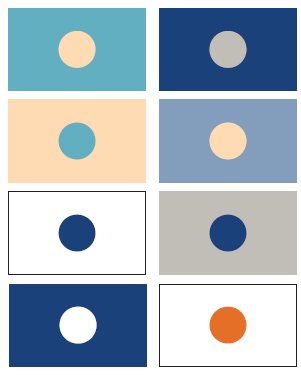
The color palette blends the warmth of wood with the depth of ocean blue, reflecting the balance between stability and exploration, intuition and analysis, and humanity and technology.
From Ships to Spacecraft
The helm’s essence transcends the sea.
It lives wherever direction matters — in a pilot’s joystick, a car’s steering wheel, a spacecraft’s thrusters, even a gamer’s controller.
Every journey — real or virtual — demands a sense of direction.
So does every brand that aspires to make a lasting impact.
Our Message
The helm is more than a design element.
It’s a statement of principle — a declaration of how we navigate our world:
- Strategy before speed.
- Insight before automation.
- Human intelligence before artificial output.
- Direction before momentum.
Because in the end, success is not defined by speed, but by clarity of direction.