
The Acculligence Model for connected insight, content, and multilingual communication
In modern media and communications, data and language are often treated as separate disciplines. One team tracks the conversation; another shapes the message. One side measures what is being said; the other decides how an organization should speak.
In practice, however, the two are deeply connected. Media intelligence without strong language can remain insight without impact. Language solutions without media understanding can produce polished communication that misses the moment, the audience, or the objective.
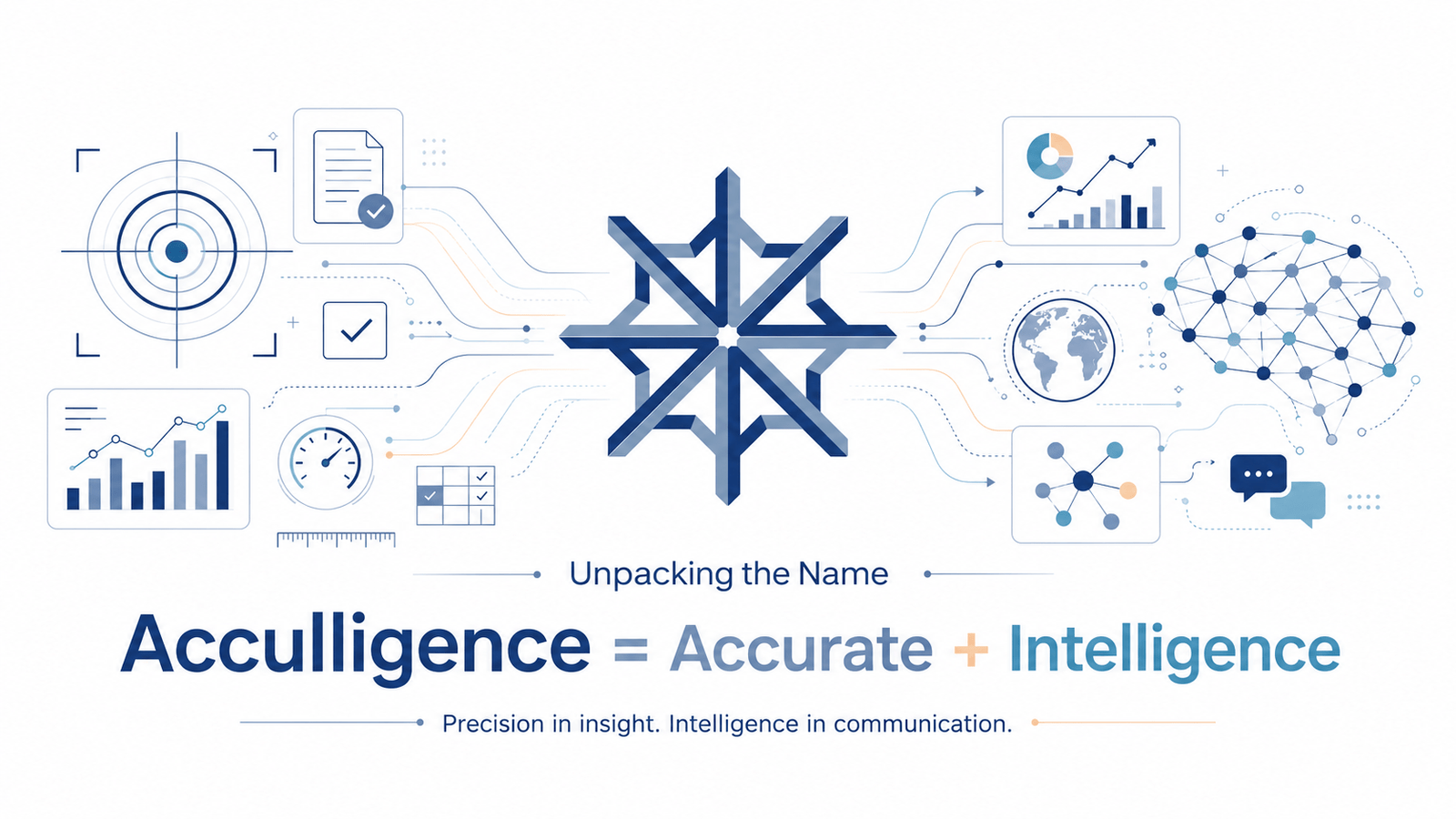
That is why Acculligence brings media intelligence and language solutions together, not because one replaces the other, but because organizations need both to work in concert: to understand the landscape, read the signals, and communicate with clarity, consistency, and purpose across languages and platforms.
For government entities, private companies, marketing agencies, media organizations, and nonprofit institutions, the challenge is no longer simply to monitor what is being said or to produce well-written content. The real challenge is to build a connected system that sees the full picture, follows a clear strategic direction, and turns understanding into communication that serves defined media and communication goals.
The Problem With Working in Silos
Many organizations still manage media and communication work through separate providers. One team monitors coverage. Another analyzes the data. A third writes the content. A fourth translates it. Another may handle publishing, media relations, or campaign execution.
Each provider may do its job well. But when the work is fragmented, the message often pays the price.
A translation may be accurate, yet miss the political, institutional, or media context behind the original message. A piece of content may read well, yet fail to address the real concerns, risks, or perceptions revealed by audience sentiment. A media analysis report may be rich with charts and indicators, yet stop short of turning those insights into practical messaging that can be used in a statement, speech, article, post, briefing, or campaign.
This is where the gap appears: between insight and expression.
The question is not only whether the data is accurate or whether the language is polished. The real question is whether both are working together. Does the message reflect what the organization has learned from the media landscape? Does the translation carry the same intent, tone, and institutional weight? Do the recommendations lead to communication that can actually be implemented?
When the answer is no, organizations spend more time explaining the same context to multiple teams, reviewing the same message from different angles, and trying to align terminology, tone, and direction across disconnected workflows. In high-stakes government and institutional work, these gaps are not minor. They affect speed, consistency, trust, and impact.
Why Integration Matters
At Acculligence, we believe media intelligence should not end with a report. It should support better decisions, sharper messages, and more confident communication.
A strong project begins by understanding the landscape: what is being said, who is saying it, where it is spreading, how audiences are responding, and what opportunities or risks may be emerging. But that understanding only becomes valuable when it informs what an organization says next.
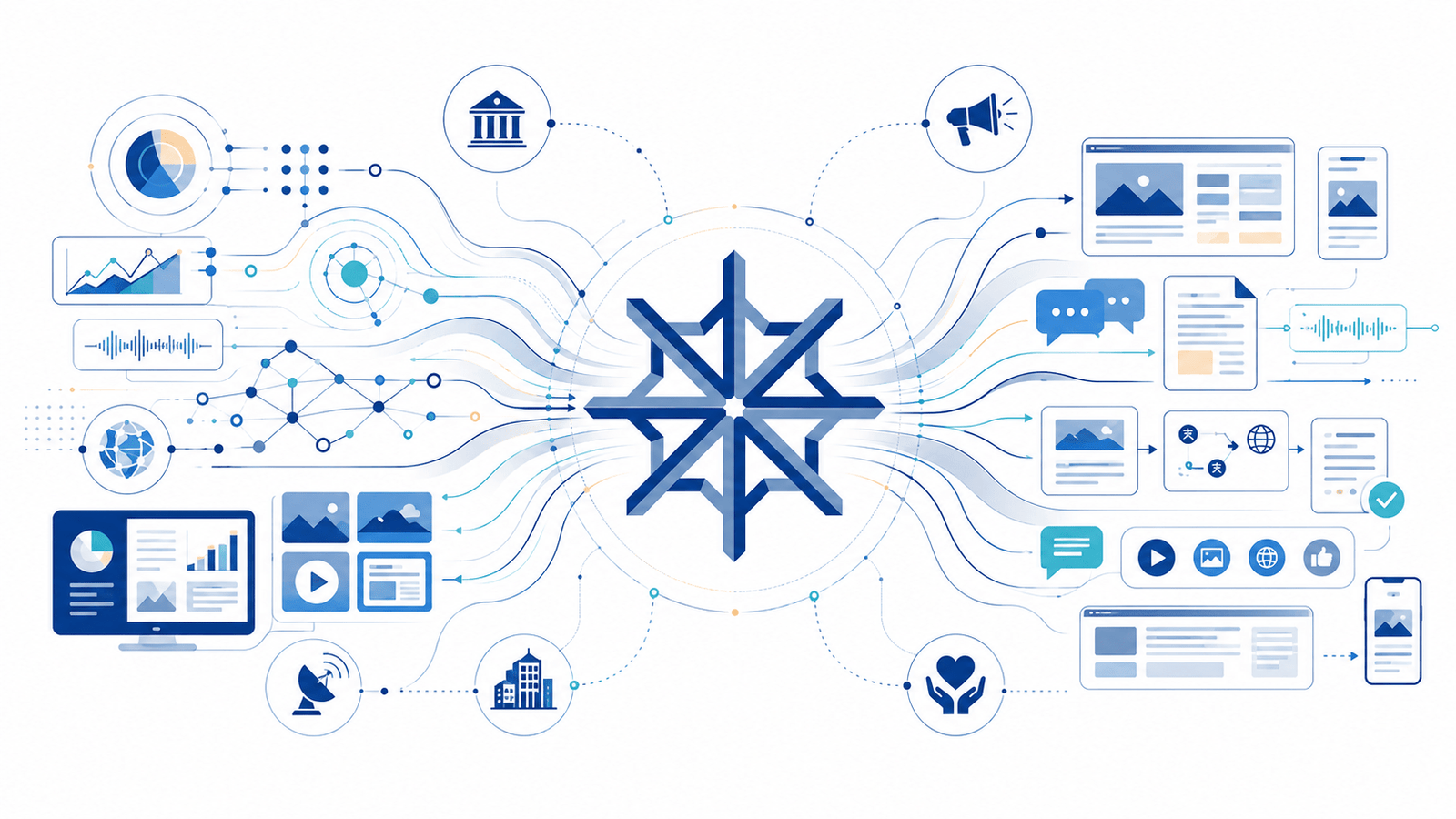
That is why our model connects media monitoring, analysis, and social listening with content creation, translation, editing, and localization. The same strategic context that shapes the analysis also shapes the message. The same understanding of audience, tone, risk, and opportunity informs the report, the press release, the executive brief, the translated material, the website content, and the multilingual publication.
In this model, translation is not a final technical step. It is part of the communication strategy. Content is not written in isolation. It is shaped by insight. Analysis is not a polished document that sits on a shelf. It becomes a foundation for action.
What This Means for Government Entities
Government communication requires discipline, accuracy, and sensitivity. A strategy, initiative, statement, publication, or social media post is rarely read in isolation. It is part of a wider institutional image and a broader public conversation.
For government entities, the Acculligence model offers a more connected way to manage that complexity. Media monitoring and analysis provide a clearer view of coverage, public perception, stakeholder reactions, emerging narratives, and potential risks. Language solutions then turn that understanding into communication that is consistent, accurate, and aligned with the entity’s objectives.
This is particularly important when communicating with both local and international audiences. The message must remain faithful to the institution’s intent while sounding natural and credible in every language. Terminology must be consistent. Tone must be appropriate. Context must not be lost.
When monitoring, analysis, content, and translation work together, the result is not only better language. It is stronger institutional communication.
What This Means for Companies, Agencies, and Media Organizations
Private companies, PR agencies, marketing firms, brand teams, and media organizations face a similar challenge from a different angle. They need to understand audiences, track competitors, measure campaign impact, identify risks early, and respond with messages that feel timely, relevant, and coherent.
A campaign may look strong but fail to create the right media footprint. A message may perform well in one market but lose force when adapted for another. A social conversation may reveal an opportunity, but the response may arrive too late or in the wrong tone.
By connecting intelligence with language, Acculligence helps close that gap. Monitoring and social listening reveal the conversation. Analysis identifies the patterns. Content, translation, and editing turn those patterns into communication that can be published, shared, localized, and measured.
The value lies in the full cycle: from data to insight, from insight to message, and from message to measurable impact.
A Model Built on Long Experience
This approach did not appear overnight. It grew out of a long professional journey across media, translation, analysis, and content creation.
Our experience was shaped through years of working with media content, global coverage, think tank outputs, institutional communication, and multilingual publishing. That journey included World in Arabic, a platform focused on monitoring, translating, and analyzing global media and research trends, and later evolved into Acculligence as a specialized model for media intelligence supported by language solutions.
The point is not that Acculligence moved from one field to another. The point is that these fields were always connected in practice. The market simply made that connection more urgent.
Organizations today need fewer handoffs, fewer blind spots, and fewer disconnected suppliers. They need partners who understand both the media environment and the language of institutional communication.
How This Shows in Our Work
Acculligence’s work reflects this integrated model in practice. Our projects cover media monitoring and analysis, campaign analysis, social listening, daily media briefs, media presence measurement, discourse analysis, and think tank monitoring. They also include media translation, app localization, official and multimedia content translation, corporate profiles, website content, reports, publications, and institutional materials.
This range is not a scattered service list. It reflects how communication work actually happens.
A single project may require monitoring media coverage, analyzing public reaction, preparing an executive brief, drafting publishable content, translating or editing that content, localizing it for another audience, and producing a final report that captures the results. When these steps are handled by one partner with one shared understanding of the file, the work becomes smoother and the message becomes stronger.
What Clients Gain
The most immediate benefit is clarity. Clients do not have to bridge the gap between analysis and communication themselves. The insight is already connected to the message.
The second benefit is consistency. Organizations that communicate across languages and platforms need consistent terminology, tone, and direction. This is difficult to maintain when every output passes through a different team with a different understanding of the context.
The third benefit is efficiency. Working with one integrated partner reduces repeated briefings, fragmented reviews, duplicated effort, and avoidable delays.
The fourth benefit is better judgment. Recommendations are stronger when they are informed by both media analysis and communication practice. They are not abstract observations from a distance, and they are not language choices made without strategic context. They are grounded in a fuller understanding of the landscape, the audience, the message, and the goal.
Trust Earned Through Work
Acculligence works with government entities, companies, media organizations, and partners across multiple sectors. This experience reflects the kind of needs we support: monitoring and analysis, content, translation, editing, and communication support for initiatives, events, campaigns, reports, and strategic projects.
In these areas, trust is not built through slogans. It is built through accuracy, confidentiality, context, responsiveness, and disciplined delivery. Clients need a partner that can understand sensitive files, manage complex requirements, and produce work that is both strategically useful and linguistically sound.
That is where Acculligence is positioned: as a specialized partner for organizations that need to understand what is happening around them and communicate with clarity, professionalism, and impact.
Why This Matters Now
The media environment is faster, more connected, and less forgiving than ever. A message can travel across platforms in minutes. A local issue can become regional or international. A translation can shape perception. A delayed response can leave space for someone else to define the narrative.
For that reason, separating media intelligence from content and language work no longer reflects how communication actually operates. Organizations need systems that monitor, analyze, understand, write, translate, edit, and support decisions as part of one connected process.
That is the Acculligence model.
We brought media intelligence and language solutions together because our clients do not need more isolated services. They need a clearer path from understanding to action.
They need to see the landscape as it is, and speak about it as they should.